





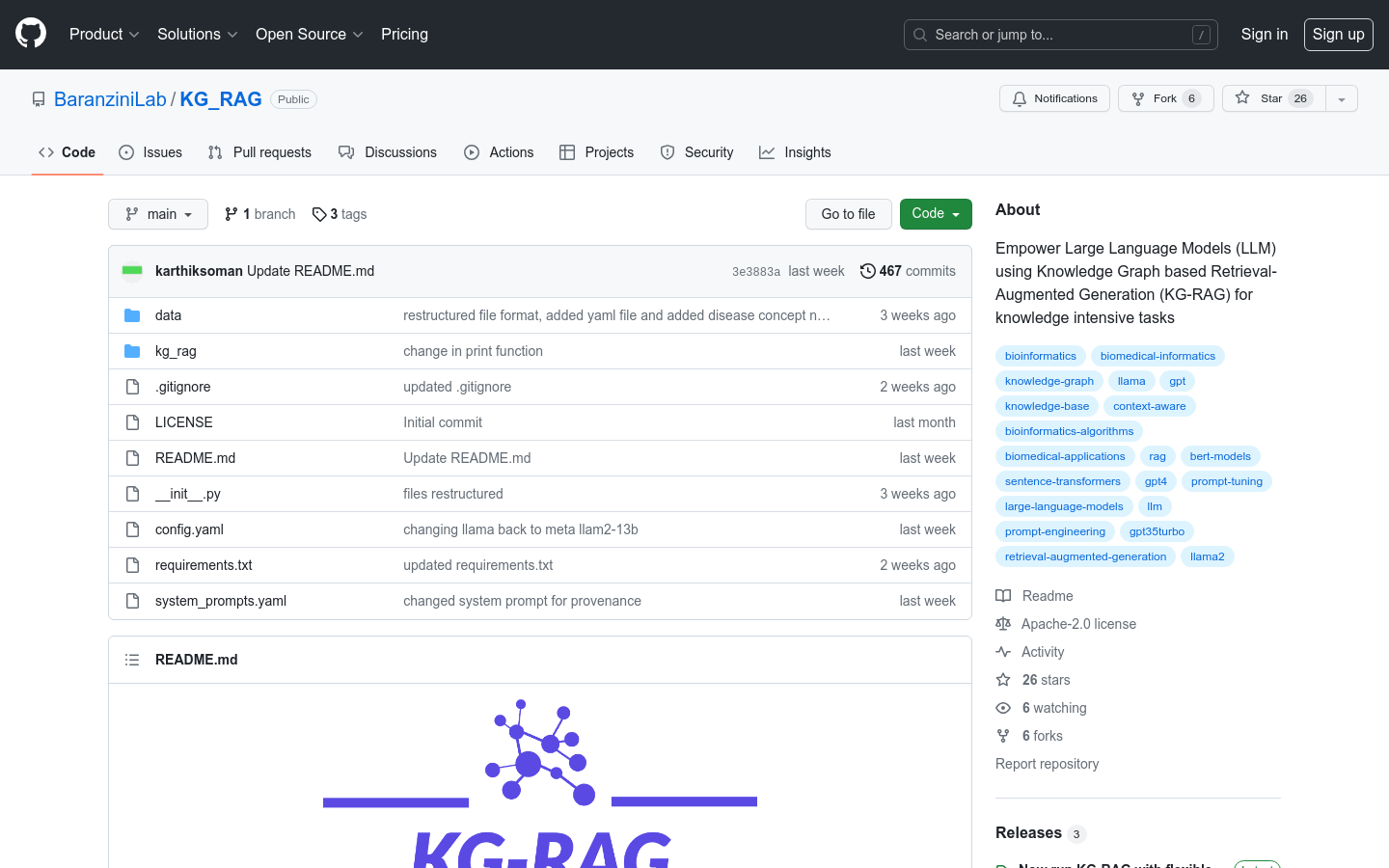
KG RAG
KG RAG:'Knowledge-Enhanced Retrieval-Generation Framework for LLMs'
Tags:AI Knowledge GraphAI Knowledge Graph AI model Bioinformatics Knowledge Graph Natural Language Processing Open Source Standard PicksOverview
The KG-RAG framework represents a task-agnostic approach that integrates explicit knowledge from a structured knowledge graph with the implicit understanding of a large language model. In this implementation, we leverage SPOKE, a comprehensive biomedical knowledge graph, as the primary source of contextual information. A distinctive feature of KG-RAG is its ability to identify and extract “prompt-relevant context” from the SPOKE knowledge graph, which refers to the smallest set of information necessary for generating an appropriate response to user queries.
Target Users
KG-RAG is designed for users engaged in knowledge-intensive natural language processing tasks. This includes professionals involved in question answering, text summarization, and content generation who require domain-specific context to enhance their models’ performance.
Use Cases
The framework supports a variety of applications across different domains:
1. Biological Function Queries: For example, when presented with the prompt “What is the function of gene P53?”, KG-RAG retrieves relevant information from SPOKE and generates an explanation regarding the role of the P53 gene.
2. Drug Mechanism Analysis: Given a drug name as input, KG-RAG can extract knowledge about the drug’s mechanism of action and produce a concise summary of its effects.
3. Symptom-Based Diagnostics: When provided with symptom descriptions, KG-RAG identifies related entities and relationships from the knowledge graph and generates detailed diagnostic reports.
Features
KG-RAG offers several key capabilities that make it a powerful tool for integrating domain-specific knowledge into language models:
1. Prompt-Specific Context Extraction: The framework efficiently extracts context from the SPOKE knowledge graph that is directly relevant to user prompts.
2. Enhanced Model Capabilities: By incorporating domain-specific information, KG-RAG empowers general-purpose language models to deliver more accurate and context-aware responses.
3. Multi-Model Support: The framework is compatible with leading language models including GPT and Llama, ensuring flexibility in model selection based on specific requirements.
This innovative approach bridges the gap between structured knowledge representation and powerful language modeling, making KG-RAG a valuable tool for a wide range of biomedical applications.


